
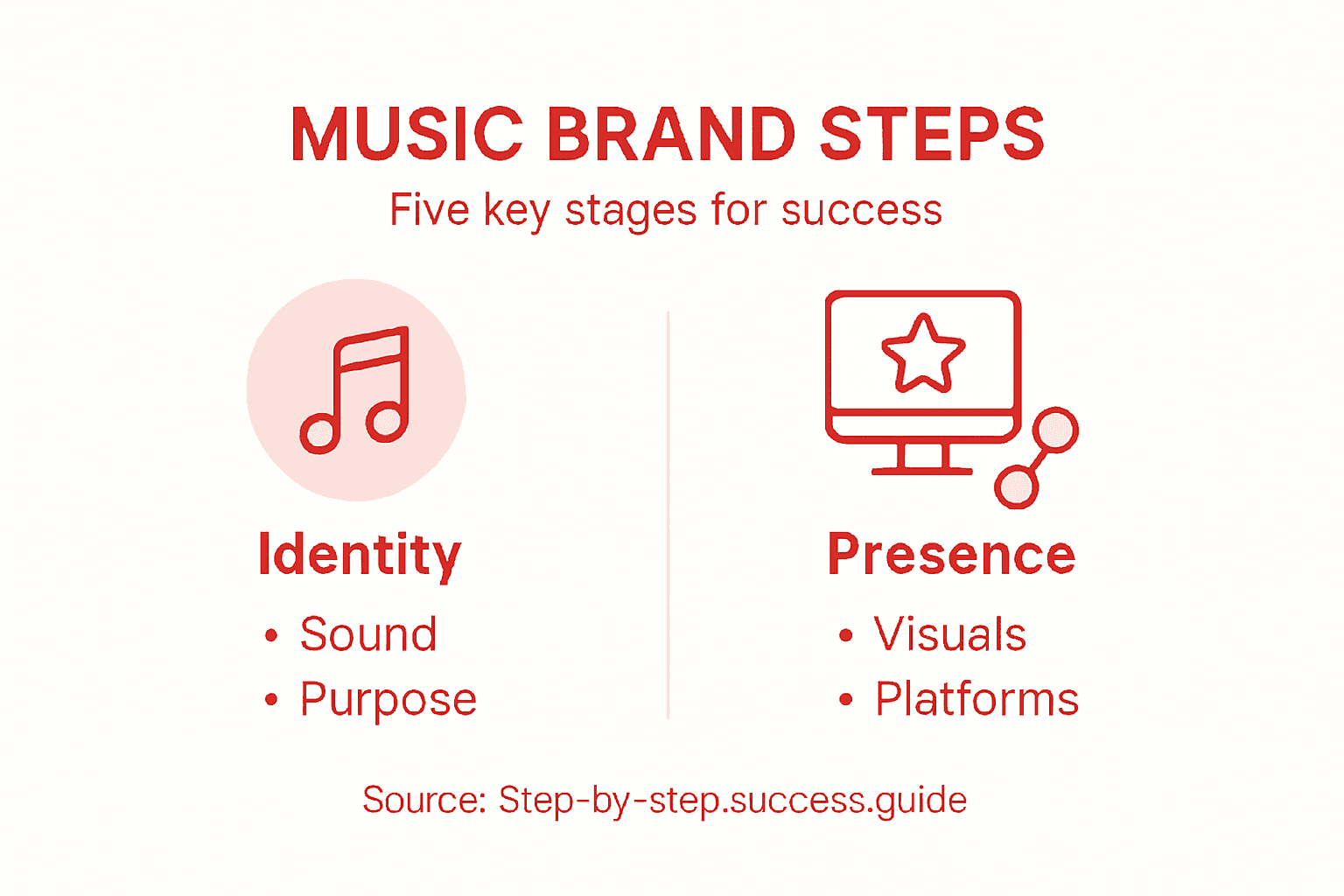
Standing out as an artist means more than just making music. Every independent creator faces the challenge of building a brand people remember. Musical identity shapes how listeners understand your creative work and strong branding impacts every step, from Spotify drops to Instagram feeds. This guide breaks down actionable steps to craft a signature identity, build your visual presence, and connect across the platforms that matter most to modern music audiences.
Table of Contents
- Step 1: Define Your Signature Music Identity
- Step 2: Design A Visual And Digital Brand Presence
- Step 3: Engage Your Audience Across Key Platforms
- Step 4: Collaborate With Influencers And Partners
- Step 5: Measure Brand Impact And Refine Strategy
Quick Summary
| Key Message | Explanation |
|---|---|
| 1. Define Your Signature Identity | Understand your unique sound and vision to create a clear brand. This clarity will guide your decisions as an artist. |
| 2. Create a Visual Brand Presence | Develop a cohesive visual identity across platforms that reflects your music’s energy and emotional tone. Consistency is key for recognition. |
| 3. Engage Across Multiple Platforms | Focus on specific platforms where your audience spends time, and tailor your content to their preferences for better engagement. |
| 4. Collaborate With Relevant Partners | Choose collaborators whose values align with yours for authentic partnerships that benefit all involved and resonate with audiences. |
| 5. Measure and Adjust Your Strategy | Regularly track key metrics to evaluate what works and refine your approach based on data and audience feedback for continuous improvement. |
Step 1: Define your signature music identity
Your signature identity isn’t about copying what’s trending or fitting into someone else’s mold. It’s about understanding what makes your music distinctly yours and then committing to that vision. This is where everything starts. Without clarity here, you’ll spend years chasing trends, collaborating with the wrong people, and confusing your audience about who you actually are as an artist.
Start by identifying the core elements that define your sound. Listen to your five favorite tracks that you’ve created. What instruments dominate? What’s the energy level? Is your production minimalist or layered? What emotions do you want listeners to feel? Write these observations down, not because you need permission to make music, but because clarity shapes decisions. You’ll use this whenever you’re considering a feature, booking a show, or choosing production equipment. Think about the visual world that surrounds your music too. Are you corporate and polished, or raw and underground? Do you wear streetwear and sneakers or something completely different? Your brand encompasses the audio and visual experience together.
Now consider why you make music in the first place. Musical identity shapes how listeners understand your creative work, and personal motivation fuels authentic storytelling. Are you making music to process emotions? To build community? To challenge the status quo? To make people dance? The answer matters because it influences every creative choice you make moving forward. Your reason becomes your north star when things get confusing or when you face pressure to change direction for quick clout or money.
Some creators find their identity by looking backward. Maybe hip-hop shaped your childhood. Maybe you grew up around live instruments. Maybe you discovered a specific subgenre that awakened something inside you. Build from that foundation rather than pretending it doesn’t exist. Others discover their identity by looking outward. Who do you actually respect in your genre, and why? What’s missing from that scene that only you could provide? The gaps in music you wish existed are often clues to your unique position.
Write down your signature in three to five sentences. Not a manifesto, but a clear statement. Something like: “I create introspective trap beats layered with live guitar samples that speak to emotional vulnerability. My production is clean but never polished, always maintaining that raw feeling. I’m building a community of creators who refuse to hide their sensitivity.” That clarity becomes your decision filter. Every opportunity, collaboration, and creative direction gets measured against it.
Pro tip: Test your signature identity with people who don’t know you yet by sharing one track and asking what they think your brand is about, then compare their answer to what you actually intended—gaps reveal where your identity needs to be louder.
Step 2: Design a visual and digital brand presence
Your visual and digital presence is the first thing people see before they ever hear your music. This is where your signature identity becomes tangible. You’re creating a cohesive experience across every platform and touchpoint, from your Instagram feed to your website to the thumbnail on your YouTube videos. When these elements work together, they tell a story that reinforces who you are as an artist.
Start with your core visual elements. Choose a color palette that reflects your music’s energy and emotional tone. If your sound is dark and introspective, your colors probably won’t be bright neons. If you make uplifting dance music, pastels or vibrant hues might feel right. Pick two or three primary colors and stick with them everywhere. Your logo or wordmark comes next. This doesn’t need to be complicated. Some of the strongest music brands use simple typography combined with a single graphic element. Think about what symbol or shape represents your work. Is it geometric and precise, or organic and flowing? Your logo appears on streaming platforms, social media profiles, merchandise, and anywhere else your brand lives. Make sure it works at small sizes on a phone screen and large sizes on a billboard. The goal is instant recognition, even if someone sees just a corner of it.

Typography matters more than most creators realize. Graphic design elements like typography shape how audiences recognize your brand in competitive markets. Choose one or two fonts for your entire brand and use them consistently. One font works for headlines, another for body text. This consistency builds familiarity. When someone sees your specific font combination, they should think of you immediately. Your visual identity also applies to how you present yourself on digital platforms. Your profile pictures, banner images, and even the way you crop photos should align with your brand’s aesthetic. If you’re building an urban streetwear vibe, your photos should feel authentic to that world. If you’re promoting sophisticated production, your imagery should reflect technical precision.
Digitally, your website is your home base. This is where you control the narrative completely. Your website should include your music, your story, upcoming shows, and a way for people to contact you or sign up for updates. Consistency across your website and social media platforms creates strong emotional connections with audiences through cohesive visual identity. Your Instagram feed tells a story when viewed as a grid. Before you post, imagine how the image looks alongside your last five posts. Does it maintain visual harmony or does it stick out awkwardly? Your TikTok or YouTube videos should have consistent intro sequences, overlay graphics, and color grading. When someone discovers you on one platform and visits another, they should immediately recognize it’s the same artist.
Consider your photography and videography style too. Will you always shoot in natural light or studio settings? Black and white or color? Close ups or wide shots? These choices matter because repetition breeds recognition. People start predicting what your content looks like, and that’s powerful. Your digital presence should also feel intentional about which platforms you actually use. You don’t need to be everywhere. Pick the two or three platforms where your audience actually hangs out and dominate those spaces. Quality beats presence on every platform.
Pro tip: Create a simple one-page brand guide document that shows your colors, fonts, logo variations, and key visual rules, then reference it every time you post or create anything so your brand stays visually consistent across all platforms.
Step 3: Engage your audience across key platforms
Your audience doesn’t live on just one platform anymore. They’re scrolling TikTok, listening on Spotify, watching YouTube, checking Instagram, and engaging on Discord all in the same day. Your job is to meet them where they actually spend their time and give them reasons to stay engaged. This isn’t about being everywhere at once. It’s about choosing the platforms where your specific audience hangs out and creating content that makes sense for each one.
Start by understanding where your audience lives. If you’re making trap or hip-hop beats for Gen Z creators, TikTok is non-negotiable. If you’re producing electronic music for older millennials, YouTube and SoundCloud might matter more. Research shows that global music listeners use an average of seven different platforms to discover and consume music, so your strategy needs to span multiple spaces. Don’t try to post the same content everywhere. Each platform has its own culture, format, and audience expectations. TikTok rewards short, snappy videos that feel authentic and unpolished. Instagram demands high production value and cohesive aesthetics. YouTube wants longer form content that builds deeper connections. Twitter thrives on personality and quick takes. Discord is where your most devoted fans build community around you.
Your streaming presence matters differently. Spotify and Apple Music aren’t primarily engagement platforms, but they’re discovery machines. Get your music on these services and optimize your profile with a strong bio, high-quality artwork, and playlists that tell your story. When someone finds you on Spotify, they should be able to immediately go to your Instagram or TikTok to learn more about who you are. Create a content calendar that works for you. Post consistently but not obsessively. One quality post per week on Instagram beats seven low-effort posts. One well-edited TikTok that shows your creative process means more than five videos of you lip-syncing. Behind the scenes content performs incredibly well. Show people how you produce, how you test new ideas, the failed experiments, the late nights grinding. People connect with the person, not just the product.
Engagement means responding. When someone comments on your post, reply. When someone sends you a message, answer when you can. This builds loyalty. Digital platforms shape how listeners discover music and participate socially, and direct interaction strengthens those connections. Create content that invites conversation too. Ask questions in your captions. Poll your audience about which beat they prefer. Share your struggles alongside your wins. People want to feel part of your journey, not just observers of it. Use the tools each platform gives you. Instagram Stories, TikTok duets, YouTube community posts, Discord channels. These aren’t distractions from your music. They’re the modern version of how artists build fanbases. Your most dedicated fans will follow you everywhere if you give them reasons to.
Track what works. Pay attention to which posts get engagement, which videos get shared, what times you post and get the most response. You don’t need fancy analytics software. Most platforms show you this data for free. A simple spreadsheet tracking what gets traction helps you understand your audience better than guessing ever will. Your goal isn’t millions of followers. It’s building a real community of people who care about your music and show up for new releases, attend your shows, and tell their friends about you.
Here’s a comparison of digital platforms for engaging music audiences:
| Platform | Strengths | Content Type | Best Audience Fit |
|---|---|---|---|
| TikTok | Viral reach, quick discovery | Short-form video | Gen Z music fans |
| Visual brand building | Photos, stories | Mainstream millennial fans | |
| YouTube | Deep engagement, long-form | Music videos, vlogs | Diverse music audiences |
| Discord | Community-building, direct chat | Private server posts | Hardcore supporters |
| Spotify | Mass discovery, playlists | Audio tracks | Global music listeners |
| Personality, real-time chat | Tweets, replies | Active and opinionated fans |
Pro tip: Create content batches on one day each week, filming or creating multiple videos and posts at once, then schedule them to post throughout the week so you stay consistent without burning out from daily content creation.
Step 4: Collaborate with influencers and partners
Collaborations can accelerate your growth exponentially, but only if you choose the right partners and approach it strategically. This isn’t about chasing the biggest names or paying for shoutouts that feel forced. It’s about finding people whose audiences align with yours and creating something genuine together that benefits everyone involved. The best collaborations feel natural to both audiences, not like a random advertisement.
Start by identifying who your ideal collaborators are. These aren’t necessarily the biggest influencers in your space. They’re people whose values and audience match yours. If you make introspective lo-fi hip-hop, collaborating with a streamer who plays your music during their streams makes sense. If you produce club tracks, partnering with DJs and club promoters opens doors. Look for micro-influencers with 10,000 to 100,000 engaged followers rather than massive accounts with millions of disengaged followers. Someone with a smaller audience who genuinely loves your music will drive better results than a huge account that views you as a transaction. Research potential collaborators first. Do they listen to music like yours? Is their audience demographics similar to yours? Are they authentic about their partnerships or do they promote everything? Effective influencer marketing requires strategic management of brand and creator interactions to maximize authenticity and impact. Don’t just send a generic collaboration request. Show that you’ve actually paid attention to their work.
When you reach out, make it personal and specific. Tell them exactly what you have in mind. Maybe you want to create a remix together. Maybe you want them to feature your music in a video or stream. Maybe you want to collaborate on a TikTok challenge where both your audiences participate. Modern music partnerships succeed when they go beyond traditional sponsorships to create meaningful, community-centered campaigns. The collaboration should feel valuable to their audience too, not just yours. Be clear about expectations. What will each person contribute? When will content go live? How will you cross-promote it? Having this conversation upfront prevents misunderstandings and shows professionalism.
Consider brand partnerships too, but be selective. You don’t want to partner with every company that approaches you. Choose brands that actually align with your image and values. If you’re a creator focused on authenticity and independent hustle, partnering with a brand that sells fast-moving, low-quality products damages your credibility. But a partnership with clothing brands, music equipment companies, or platforms that genuinely serve creators feels natural. BahgBoyz, for example, makes sense for independent music creators building brands in the modern creator economy. These partnerships can mean financial compensation, free products, or mutual promotion. Whatever the arrangement, make sure it feels authentic to your audience.
Always disclose partnerships transparently. Your audience can tell when something feels inauthentic, and violating that trust costs more than any collaboration payment. Use hashtags like “#ad” or “#sponsored” when required. But more importantly, only partner with things you actually believe in and would use anyway. Your credibility is your currency. Document collaborations through behind the scenes content. Show how you’re working together, what you’re creating, the creative process. This makes your audience excited about the final product and shows genuine partnership rather than a transactional relationship.
Pro tip: Start collaboration conversations with micro-influencers and creators who have engaged communities of 10,000 to 50,000 followers, as they often deliver better results than mega-influencers and are more likely to respond and build genuine relationships with you.
Step 5: Measure brand impact and refine strategy
Building a music brand isn’t a set-it-and-forget-it operation. You need to constantly measure what’s working, what isn’t, and adjust accordingly. Without data, you’re just guessing. With data, you’re making informed decisions that compound over time. This step separates artists who plateau from those who continue growing strategically.
Start by defining what success actually means for your brand. Is it streams? Social media followers? Email list growth? Ticket sales? Collaboration opportunities? Be specific. You can’t measure progress without knowing what you’re measuring toward. Key brand equity components like awareness, perceived quality, and loyalty directly influence audience satisfaction and recommendations, so track metrics that reflect these dimensions. Awareness metrics include how many people recognize your name, logo, or sound. Quality metrics track whether people think your music is good and whether they’d recommend it. Loyalty metrics show if people come back, follow all your content, or show up to your shows. These matter way more than vanity metrics like follower counts.
Set up a simple tracking system. You don’t need complicated software. A Google Sheet works perfectly. Track monthly or quarterly numbers for your key metrics. What were your Spotify listeners last month versus this month? How many new followers did you gain on Instagram? How many people opened your last email? How many showed up to your last show? How many people engaged with your content? Look for patterns. Which types of posts get the most engagement? When do your fans actually interact with you? What collaborations brought the most new listeners? After three to six months of data, patterns emerge that guide future decisions. Maybe you notice that behind-the-scenes content performs way better than polished studio photos. Maybe your audience is most active on Tuesday evenings. Maybe collaborations with producers in a specific subgenre bring higher-quality followers than random features.
Pay attention to qualitative feedback too, not just numbers. Read comments. Watch which people keep showing up. Notice when someone asks a thoughtful question versus generic praise. Survey your audience occasionally. Ask them what type of content they want to see. Ask why they became fans in the first place. This feedback reveals whether your brand identity is actually landing the way you intend. You might think you’re a serious technical producer, but your audience follows you because you’re relatable and vulnerable in your captions. That’s valuable information that should shape what you emphasize going forward. The way your audience perceives and connects with your brand sometimes differs from your intention, and that gap tells you where to refine.
Experiment intentionally. Change one variable at a time so you know what actually caused the result. Post at a different time and track the difference. Try a new content format. Collaborate with a different type of artist. Then measure what happened. Did it help or hurt? Do it again if it helped. Stop doing it if it hurt. This systematic approach to testing prevents you from chasing trends just because they feel exciting. You’re building a strategy based on what actually works for your specific audience.
Brand equity isn’t built overnight, but you can see the progress if you know what to measure. Every quarter, take a step back and assess. Are you moving closer to your goals? Is your audience more engaged? Are people sharing your music more? Are you getting better collaboration opportunities? If the answer is yes to most of these questions, your strategy is working. If it’s mostly no, it’s time to adjust. The artists who succeed aren’t the ones who get everything right immediately. They’re the ones who pay attention, stay flexible, and evolve based on reality instead of ego.
Here’s a quick summary of core brand metrics to measure and refine your music strategy:
| Metric Type | Example Measurement | Why It Matters | Frequency to Review |
|---|---|---|---|
| Awareness | Name or logo recognition | Tracks brand fame | Quarterly |
| Loyalty | Repeat engagement | Builds community and retention | Monthly |
| Perceived Quality | Listener recommendations | Drives word-of-mouth growth | Quarterly |
| Social Growth | Followers, subscribers | Expands online reach | Monthly |
| Event Participation | Show attendance numbers | Measures real offline impact | After each event |
Pro tip: Track three to five core metrics monthly in a simple spreadsheet and review them quarterly alongside audience feedback, then test one strategic change each month based on what the data reveals about what resonates with your audience.
Elevate Your Music Brand with a Bold Identity and Style
Building a standout music brand means mastering your signature identity, creating a cohesive visual presence, and connecting authentically with your audience. The challenge is clear: how do you keep your message consistent while expressing ambition and originality in every step you take? Whether you are defining your sound or engaging fans across platforms, your brand needs to be as sharp and focused as your craft itself.
This is where BahgBoyz™ steps in to complement your journey. Designed for creators and visionaries who refuse to think small, our streetwear blends premium comfort and bold identity. Wearing BahgBoyz™ apparel is more than choosing fashion — it is embodying the mindset behind your hustle. Your brand, your music, your legacy deserve a uniform that speaks as loudly as your beats.
Discover the BahgBoyz™ Marketing T-Shirt — the perfect piece to wear while building your brand and connecting with your community. Make your statement and move confidently forward knowing your style matches your vision.
Explore BahgBoyz™ apparel and start shaping your music brand identity today. Take control of your narrative and power your creative grind in gear designed for creators like you.
Frequently Asked Questions
How do I define my signature music identity?
To define your signature music identity, reflect on your favorite tracks and identify the core elements that define your sound, such as instruments, energy levels, and emotional themes. Write a clear statement summarizing your music style in three to five sentences to serve as a guiding filter for your creative decisions.
What are the key visual elements I should include in my music brand?
Your music brand’s visual elements should include a cohesive color palette, a logo, and consistent typography that reflects the energy and tone of your music. Choose two or three primary colors and one or two fonts to use consistently across all platforms, ensuring your visual identity aligns with your musical style.
Which platforms should I use to engage my audience effectively?
Identify the platforms where your audience is most active. For example, if you create hip-hop beats, focus on TikTok, while electronic music may resonate better on YouTube and SoundCloud. Select two or three platforms and tailor your content for each to maximize engagement.
How can I measure the impact of my music brand?
To measure your music brand’s impact, establish clear success metrics such as streaming numbers, social media engagement, and audience loyalty indicators. Track these metrics monthly or quarterly in a simple spreadsheet and look for patterns that inform your strategy, adjusting based on what resonates most with your audience.
What should I consider when collaborating with other artists or influencers?
When collaborating with artists or influencers, prioritize individuals whose values and audience align with yours rather than just focusing on their follower count. Approach potential collaborators with a clear and personalized proposal that highlights mutual benefits and defines each person’s contribution to ensure a successful partnership.
How often should I review my music brand strategy?
You should review your music brand strategy every quarter to assess whether you are moving closer to your goals. Evaluate your engagement, feedback from your audience, and overall growth to determine whether adjustments to strategies are necessary to maintain momentum.
0 comments